

The math packet has been sitting on the kitchen counter since June. Its pages are still blank. Now it is the middle of August, and school starts soon.
Every parent in Fairfield County and Westchester County knows this scene. The packet was supposed to be an easy summer task. Somehow it became the thing nobody wants to talk about.
Quick answer: It is not too late to finish the math packet. The window is short, though. A realistic plan built around short daily sessions can get it done before the first day of school. It does not have to turn into a fight.
Is It Too Late to Finish the Math Packet?
No, it is not too late if you have a plan. A few short sessions spread across the next week will get the packet done. One long session the night before school starts will not.
Most packets are not actually that long once they are broken into pieces. The math usually is not the hard part, starting is the hard part. A packet that looks like ten pages of dense problems feels much smaller once it is split into five short chunks. Each chunk gets a clear stopping point.
This matters just as much in Greenwich, Darien, and New Canaan as it does in Scarsdale, Armonk, and Chappaqua. Competitive districts tend to move fast in the first weeks of school. Teachers often assume the summer packet is already solid ground. A shaky start on that ground makes the first few weeks harder than they need to be.
Why Does This One Packet Matter So Much?
Many schools grade the summer packet as the first assignment of the year. A blank packet becomes a bad first grade before the school year even really begins. Some schools use the packet to sort students into math groups. A rushed or incomplete packet can send the wrong signal about where a student actually stands.
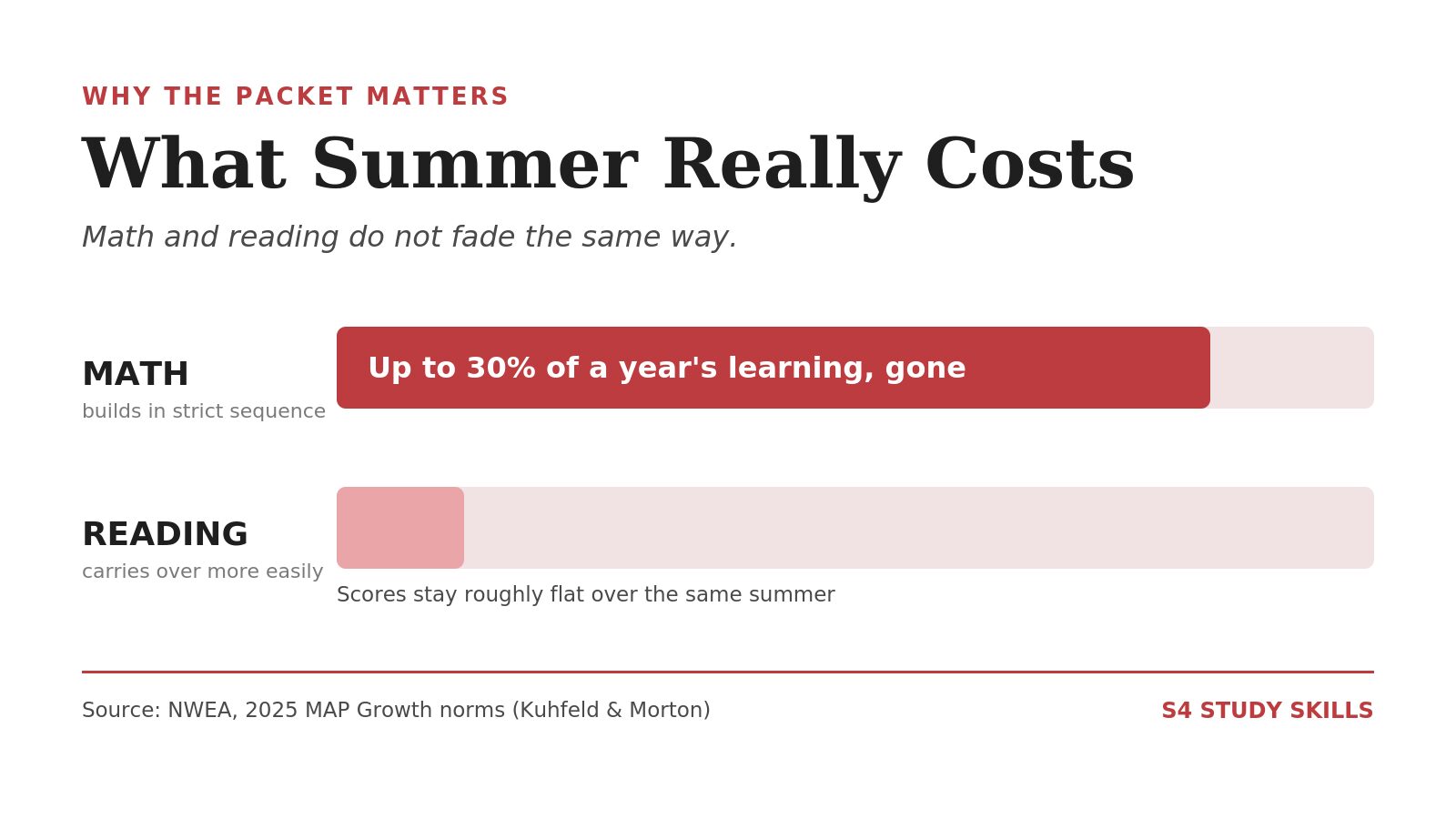
There is a bigger reason too. Math skills fade over the summer more than most other subjects do. This subject builds in a strict sequence. Each new topic rests on the one before it. Reading works differently, as a child can pick up a book in September and understand it almost as well as they did in June. Math does not forgive a gap the same way.
Research backs this up. NWEA is a nonprofit that studies student learning nationwide. Using their 2025 MAP Growth data, researchers Megan Kuhfeld and Emily Morton examined how student scores change over the summer. They found that math scores typically drop by an amount equal to 10 to 30 percent of a full school year’s learning. Reading scores barely move over the same stretch.
The packet exists to slow that drop. A packet still sitting on the counter does not slow anything. Every week it sits untouched, the gap it was meant to prevent gets a little wider.
What Is Actually Going On When the Packet Is Not Done?
Usually it is one of three things.
- Your child is genuinely stuck on a topic. Avoiding the packet feels easier than admitting they are confused.
- The packet feels huge and shapeless. It is easier to ignore than to start.
- It is plain procrastination. Summer offered a hundred more interesting things to do instead.
These three causes need three different responses. Treating them all the same way usually backfires. A stuck student needs help with the actual math, not a lecture about responsibility. An overwhelmed student needs the packet broken into smaller pieces. A procrastinating student needs real structure and a deadline that feels close enough to matter.
Most families can tell which one they are dealing with within the first ten minutes. A stuck child gets quiet and stares at the page. An overwhelmed child sighs and asks how many pages are left before they have even started. A procrastinating child suddenly remembers three other things they need to do first.
A Realistic Plan to Finish It This Week
Skip the plan to finish everything in one sitting. That plan rarely works. It also turns math into a punishment instead of a routine.
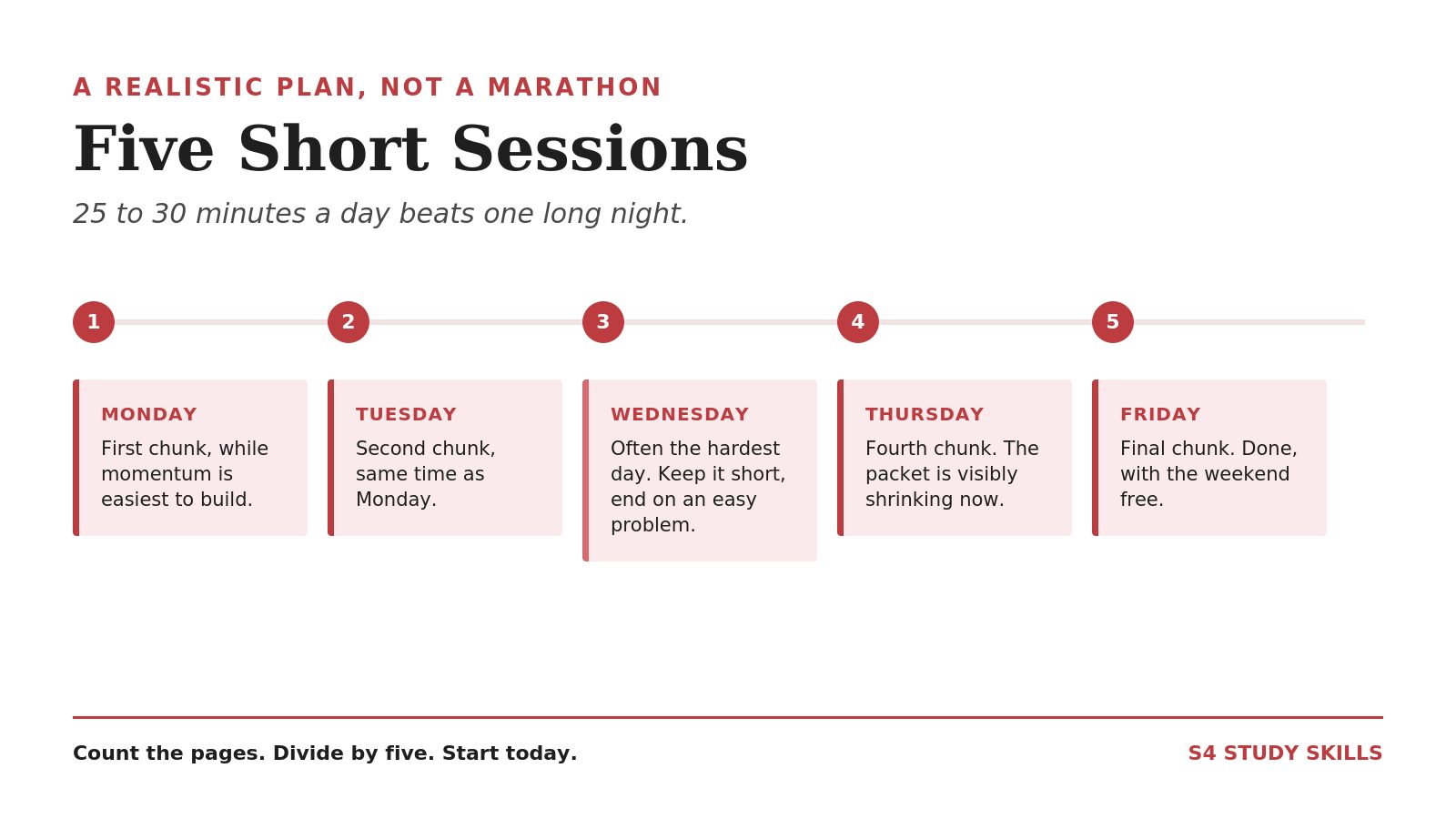
Instead, break the packet into five short sessions, one for each remaining weekday. Twenty five to thirty minutes per session is usually enough for most packets. The same time each day works better than whenever we get to it. A fixed time removes the daily argument about when to start.
Count the total pages and divide by five. That single step turns an intimidating stack into a small, specific target for each day. A packet with twenty pages becomes four pages a day. Four pages a day is a very different problem than twenty pages with no plan at all.
Here is what a five-day plan can look like.
- Monday and Tuesday cover the first two chunks, before avoidance has a chance to build back up.
- Wednesday is often the hardest day, so keep that session short and end on an easy problem.
- Thursday and Friday finish the packet, with the weekend left completely free.
Sit nearby for the first session or two, especially if avoidance has been the pattern so far. You do not need to teach the math yourself. Your presence alone often keeps a child on task long enough to build momentum. Once a child sees the packet actually shrinking, most kids keep going with less supervision each day.
What If They Are Stuck, Not Just Avoiding It?
Watch for the difference between I do not want to, and I do not understand this. A stuck child rereads the same problem several times, writing nothing down. They may erase the same answer more than once. A child who is avoiding will find any excuse to leave the table, from a sudden need for a snack to an urgent question about something unrelated.
If the packet reveals a real gap, that is useful information, not a crisis. It means you know exactly what to work on before the school year adds new material on top of it. Finding this out in mid-August is far better than finding out in October from a test grade. There are still a few weeks to address it calmly.
What If We Genuinely Cannot Finish It in Time?
Some families start this plan with only a few days left, not a full week. If that sounds like your situation, finish what you realistically can. Then stop worrying about the rest. A packet that is seventy percent done, with real effort behind it, sends a very different message to a teacher than a packet that never got opened.
A short email to the teacher before day one goes a long way. Keep it simple. Let them know your child worked through most of the packet but ran short on time on the last section. Ask how they would like to handle it. Most teachers have seen this exact situation many times before. A little communication now prevents an awkward conversation later.
What Can I Do This Week?
Our August Essential Study Skills and Executive Function Workshop starts Tuesday, August 18. Sessions run through August 20. A second session runs August 25 through 27. Both sessions cover the planning and follow through skills that keep a packet from sitting untouched in the first place. That goes well beyond this one assignment.
If math avoidance is part of a bigger pattern this year, our academic tutoring can help. We can identify the actual gap behind it before the school year builds new material on top of an old one. Call 203-307-5455 to talk through what fits your family.

Frequently Asked Questions
Is it too late to finish the summer math packet in mid-August?
No. A packet that has been sitting untouched since June can still be finished in about a week. Short daily sessions work better than one long push at the end.
What happens if my child shows up with an unfinished packet?
Policies vary by school and teacher. Many count the packet as the first grade of the year. Some use it to place students into math groups. Finishing what you can before day one is almost always better than showing up with nothing done.
How much math do kids actually lose over the summer?
Research from NWEA, using their 2025 MAP Growth data, found that math scores typically drop by an amount equal to 10 to 30 percent of a school year’s learning over the summer. Reading scores stay roughly flat over the same period.
Should I sit with my child while they finish it, or let them work alone?
Sit nearby for the first session or two, especially if the packet has been avoided so far. Once the packet starts shrinking and the child sees real progress, most students can finish the remaining sessions with less supervision.
What if my child is stuck, not just procrastinating?
Watch how they act at the table. A stuck child rereads the same problem without writing anything. One who is avoiding finds reasons to get up and leave. The fix is different for each one. It helps to know which pattern you are looking at before you decide how to respond.
Is the August workshop a fit if we are behind on the packet?
Yes. The workshop focuses on the planning and follow through skills that prevent a packet from sitting untouched in the first place. That helps well beyond this one assignment.
What if we only have a few days left, not a full week?
Finish what is realistically possible. Send a short note to the teacher before day one. A packet that is mostly done, with real effort behind it, sends a very different message than one that was never opened.
Related Resources
- August Essential Study Skills and Executive Function Workshop
- Academic Tutoring
- Executive Function Coaching
A blank math packet in mid-August feels bigger than it actually is. Most families can close the gap in about a week with the right structure. It just takes structure, not more hours in the day.
Call 203-307-5455 or visit successfulstudyskills4students.com to talk through what fits your family.

